Welcome to the website of the 11th STS Italia Conference. Here you will find information on key dates and deadlines, the conference programme, and opportunities to contribute to Italy’s main event dedicated to Science and Technology Studies.
Key information and deadlines
Conference Dates
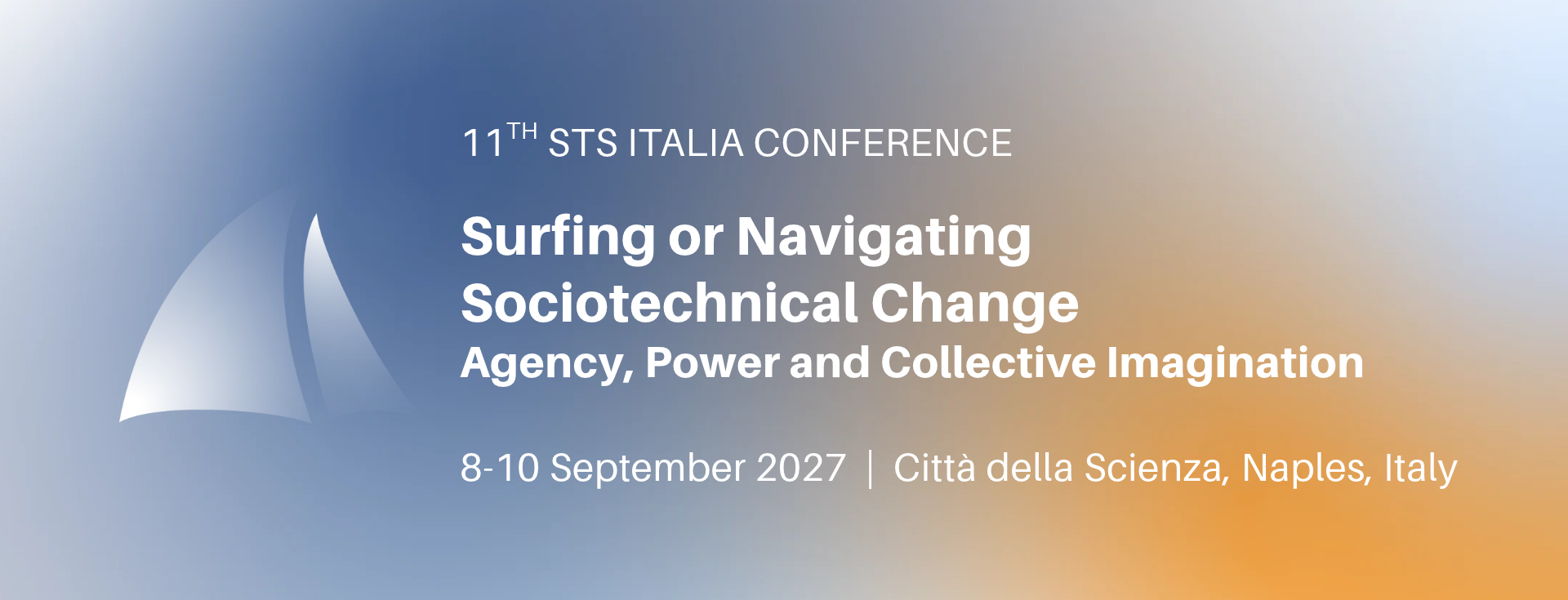
- 8 - 10 September, 2027
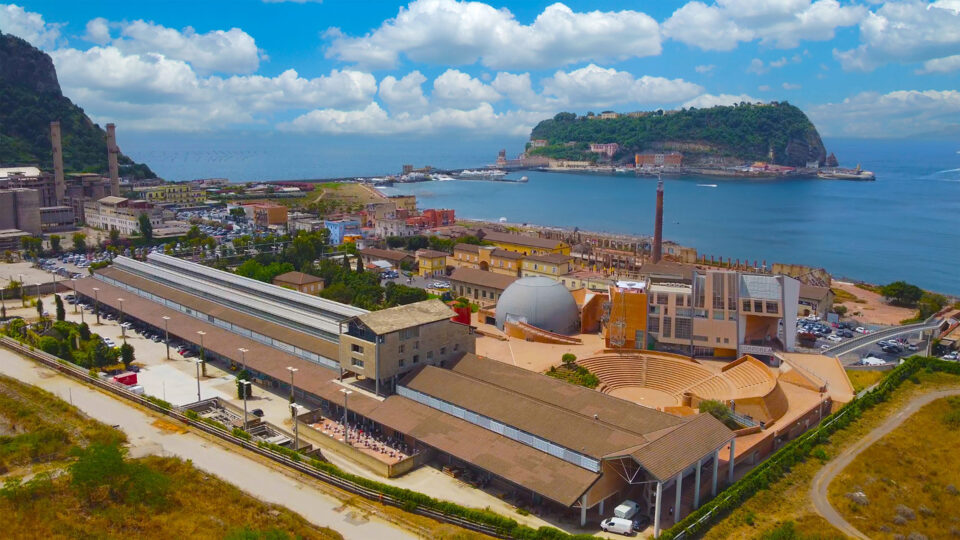
- Città della Scienza, Naples, Italy
Call for Panels
- Opens: 10 November 2026
- Closes: 17 December 2026
Call for Abstracts
- To be announced soon
Registration
Opens: To be announced soon
Early-bird registration: To be announced soon
Late registration: To be announced soon
Registration for Audience: no deadline
Program available from To be announced soon
Practical Information
English will be the official language of the conference.
The conference is planned as an in-person event. Information regarding access, accommodation and available services will be published with the call for abstracts.
Registration Fee
Participation is subject to a registration fee. STS Italia supports an affordable fee policy.
Information on registration rates, payment instructions and available grants will be announced on the STS Italia website before registration opens.
Conference theme
Sociotechnical transformations participate in reshaping practices, institutions, networks, identities and environments, and in continually redefining the boundaries of what becomes thinkable, desirable and possible — alongside other social, political, economic and cultural dynamics. Generative artificial intelligence is reorganising work, education, knowledge production and relations of trust, while its material infrastructures intensify demands for energy, water and data. Ecological and energy transitions are reconfiguring territories, modes of production and multispecies relations; innovations in biomedicine and digital health are redefining bodies, care and responsibility; and data, mobility and security infrastructures are redistributing capacities to act across institutions and communities. These developments are entangled with shifting geopolitical orders, transforming diplomacy, warfare and peace negotiations. They are a combined result of – and contribute to reconfiguring – how collective problems are defined, how decisions are made and which alternatives can be imagined. At the same time, technoscientific change is increasingly presented as rapid, disruptive and inevitable; collectives seem constantly called upon to catch up with the next wave.
Under what conditions, through which assemblages and within which power relations can collectives shape sociotechnical trajectories?
Surfing and navigating sociotechnical change should not be understood as mutually exclusive alternatives. Surfing may involve situated capacities to respond, adapt and improvise within processes already under way. Navigating refers to collective attempts to orient their directions, purposes and consequences, without implying full control. Collectives may move between, or simultaneously inhabit, these modes, while power asymmetries shape their unequal capacities to act and their vulnerabilities.
This tension also concerns the STS community itself. Recent debates have highlighted the risk that STS may follow successive waves of innovation, adopting the vocabularies, categories and agendas of technoscientific actors. How can STS develop analytical tools and matters of concern that reveal relationships, scaling processes, politics and possibilities beyond those recognised in dominant technoscientific discourses?
The 11th STS Italia Conference invites contributions that explore these questions across the multiple sites in which sociotechnical trajectories are imagined, negotiated, contested and enacted: from environmental transitions to health, from education to work, from security to care, from human–machine relations to multispecies worlds, from the interoperability of data infrastructures to artificial intelligence development.
The conference also invites reflection on the role and responsibilities of STS through dialogue with other research traditions and situated perspectives, including those from peripheral, marginalised and postcolonial contexts. How might these encounters reframe STS questions and practices, and expand collective capacities to imagine, negotiate and navigate more democratic, just and care-centred sociotechnical trajectories?
Call for panels
STS Italia invites panel proposals for its 11th Conference, “Surfing or Navigating Sociotechnical Change. Agency, Power and Collective Imagination”, to be held from 8 to 10 September 2027 at Città della Scienza in Naples, Italy.
We welcome open panels that will receive paper proposals through the subsequent general call for abstracts. Proposals should include a title and a concise account of the panel’s focus and questions. Depending on the number of accepted contributions, a panel may extend across multiple sessions.
Alongside conventional paper sessions, alternative panel formats are also welcome, providing diverse opportunities for exchange and participation, including roundtables, workshops, collaborative discussions and performances. Please explain the proposed format and any specific requirements in the panel description. Panel proposals are encouraged to engage with the conference theme through empirical research, conceptual inquiry or methodological reflection.
Relevant topics include, but are not limited to:
- Agency, adaptation and collective action in sociotechnical change
- Power asymmetries, inequalities and uneven capacities to shape technoscience
- Sociotechnical imaginaries, expectations and contested trajectories
- Artificial intelligence, algorithmic organizing, and digitalization of work practices
- Data infrastructures, interoperability and platform governance
- Ecological and energy transitions, climate justice and multispecies relations
- Biomedicine, digital health, bodies and practices of care
- Geopolitics, diplomacy, warfare and infrastructures of peace
- Public participation, democratic experimentation and technoscientific governance
- Resistance, appropriation, maintenance and repair
- Feminist, postcolonial, decolonial and disability perspectives on technoscience
- Situated knowledges, epistemic justice and marginalised contexts
- Historical trajectories, sociotechnical pasts and alternative possibilities
- STS methods, analytical tools and the politics of research agendas
- Interdisciplinary encounters, public engagement and STS interventions
- Opens: 10 November 2026
- Closes: 17 December 2026
Panel submission guidelines
Panel proposals must be submitted through the conference’s ConfTool platform by clicking here.
Latest Conference News


- Create an account on ConfTool STS Italia 2027. You must create a new account specifically for this conference: accounts used for other conferences are not valid.
- Log in and select your proposal format, following the relevant instructions. All formats require a title, a description (abstract) of up to 500 words in plain English, and up to five keywords:
- Panel: outline the panel’s theme and content.
- Roundtable or workshop: outline the content of the roundtable or workshop and list up to five expected participants.
- Collaborative discussion: outline the theme and explain how the discussion will be organised (e.g. floating chair, pitch or interactive forum).
- Performance session: outline the theme and describe the proposed spatial setting (e.g. a conventional stage–audience arrangement or another fixed, semi-fixed or informal setting).
Complete and submit your proposal by 17 December 2026 at 23:59:59 CET.
Each person may submit only one proposal, regardless of the format selected.
For any inquiry please send an e-mail to conference@stsitalia.org
In partnership with

STS Italia – The Italian Association for Social Studies of Science and Technology was founded in 2005 to build up an Italian network of researchers oriented to study Science and Technology starting from the social dynamics which characterize and interweave science and technology themselves.
The conference will be hosted at the Congress Centre of Città della Scienza, located in the former industrial district of Bagnoli, near the seafront in western Naples.
Città della Scienza is a centre for science communication, education and public engagement, bringing scientific knowledge into dialogue with society through interactive exhibitions, educational activities and cultural events. Combining a science centre with spaces for conferences and cultural exchange, it offers a stimulating setting for encounters among researchers, educators and wider publics. Its location within a landscape marked by industrial change makes it a particularly meaningful venue for reflecting on sociotechnical transformations, their material legacies and the collective possibilities they open up.